

Welcome to the School of Computational Science and Engineering
Computational Science and Engineering (CSE) is a discipline devoted to the study and advancement of computational methods and data analysis techniques to analyze and understand natural and engineered systems. Our School is a diverse, inclusive ecosystem that fosters innovation through interdisciplinary research and collaboration.
Our School creates future leaders who keep pace with and solve the most challenging problems in science, engineering, health, and social domains. Our research focuses on high-performance computing, modeling and simulation, and large-scale Big Data analytics powered by machine learning and artificial intelligence to enable breakthroughs in scientific discovery and engineering practice.
Recent Stories
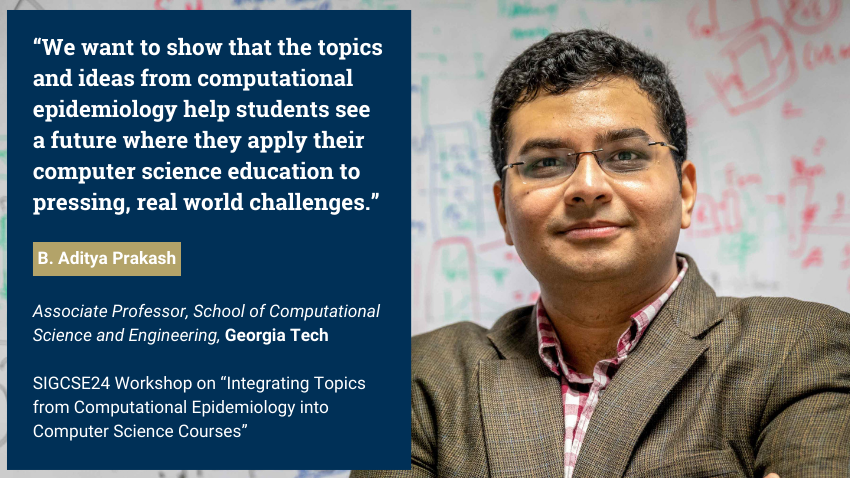
Workshop Employs Lessons from Epidemics to…
Monday, March 18, 2024

Faculty is First from…
Thursday, March 14, 2024

Dean Announces Faculty Promotions and Tenure…
Tuesday, March 12, 2024
Professor Chau has a nice ring to it... 🔔😎
— GaTech CSE (@GTCSE) March 12, 2024
Congratulations on your well deserved promotion, @PoloChau!! 🥳🎓🐝 pic.twitter.com/mfpU44rjZZ